Street markets are as much a part of London’s heritage as Big Ben or Piccadilly Circus. I myself grew up not far from Romford Market – in London’s East End – so they feel part of my heritage also. I remember our Saturday trips as a child to the market, where everything from clothes to fruit and veg would be on sale. I can still hear the loud calls of the stallholders – “six apples for a pound”, “come and get your fresh tulips”.
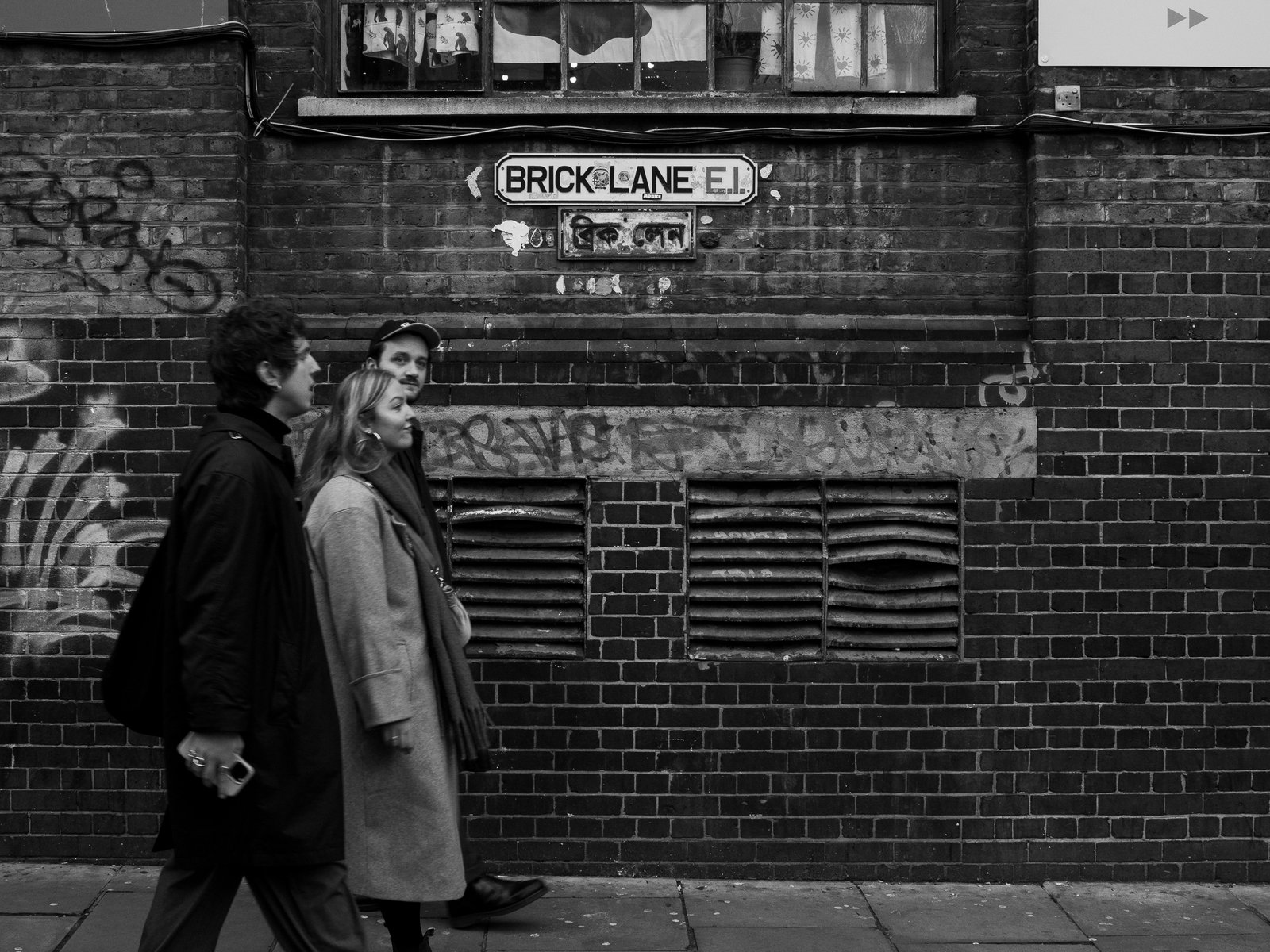
So I was looking forward to the trip I had planned to London’s Brick Lane market last Sunday. Just a stone’s throw from the shiny glass and steel of the City, Brick Lane throngs every Sunday with a mass of humanity. East End locals, tourists, trendy hipsters, and bargain hunters all cram onto the short strip of London street in the shadow of the brick chimney of the Old Truman Brewery.
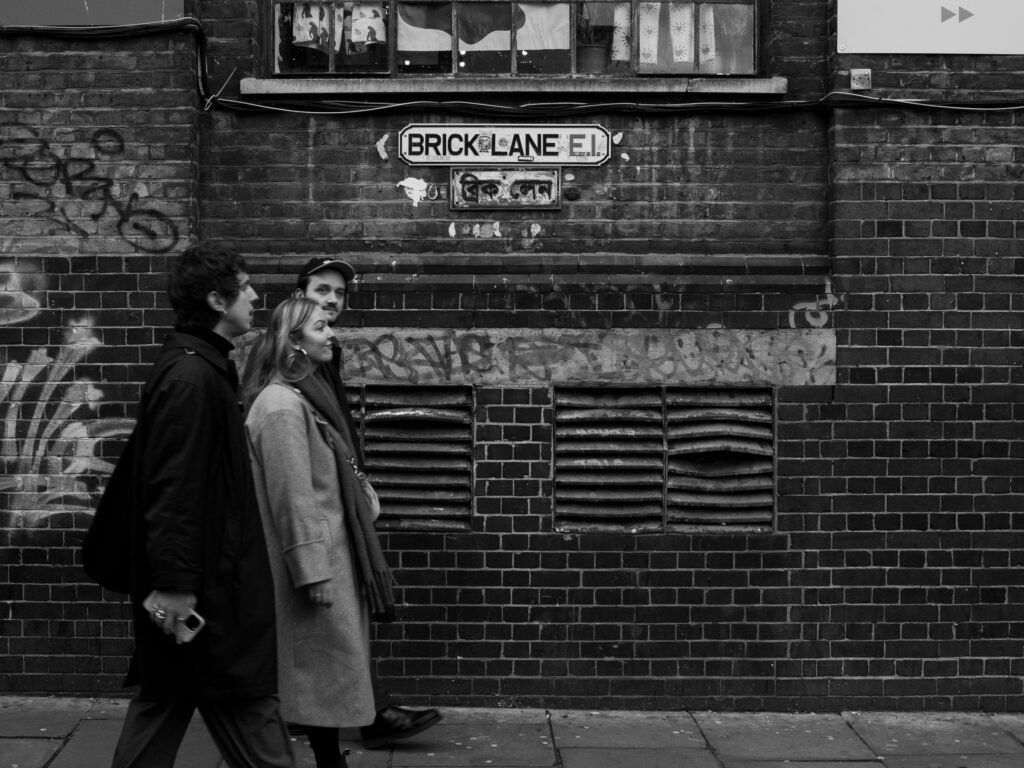
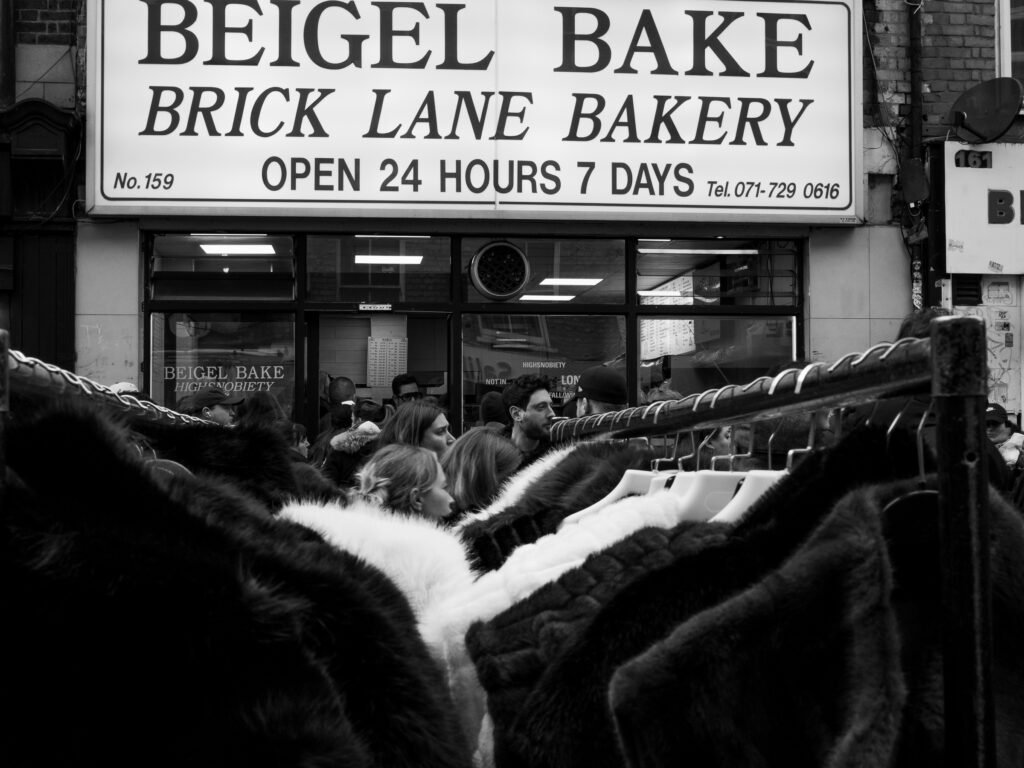
This part of London is a vibrant clash of different cultures, where gentrification sits alongside poverty, and communities of every diaspora mix freely with city workers and old-time cockneys. Brick Lane itself starts to the south with lots of South Indian restaurants. The Lane’s other claim to fame is a run of curry houses that could rival Birmingham’s famous ‘Curry Mile’. It then morphs as you head north, and on a Sunday, into Brick Lane market. The market was originally founded by London’s Jewish community in the 17th century where it was licensed to run on a Sunday (highly unusual) because the Jewish Sabbath falls on a Saturday. The market’s Jewish heritage can still be seen in the famous 24 hour bagel shops that can be found further north along Brick Lane where the hub of the old market takes place.
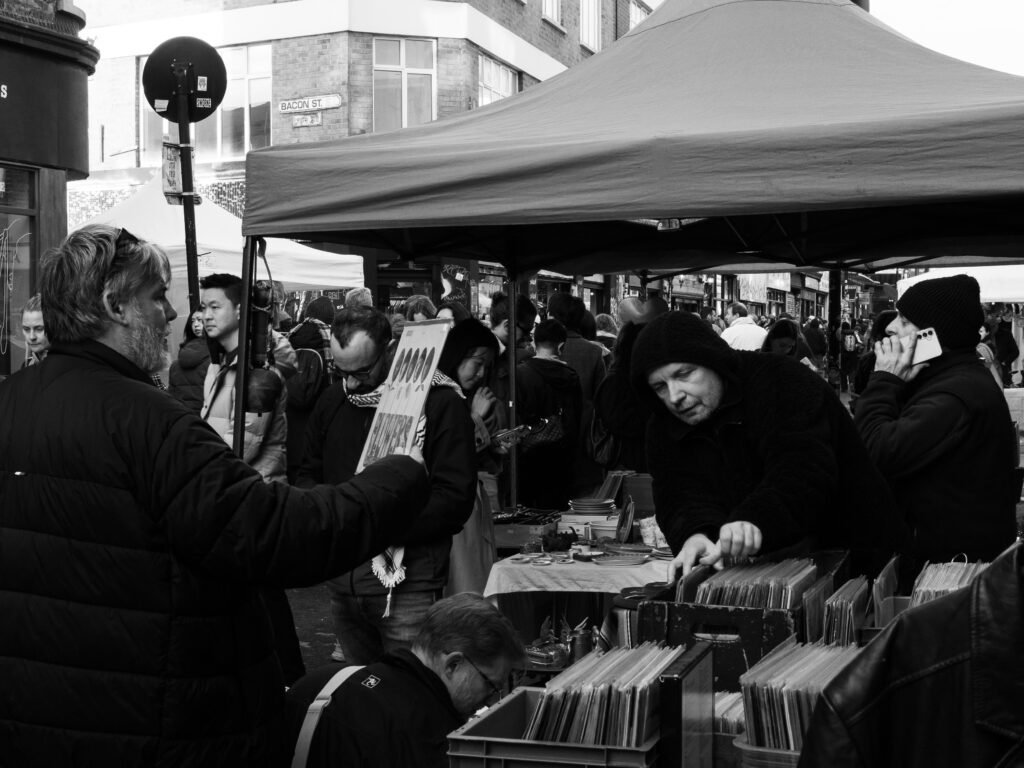
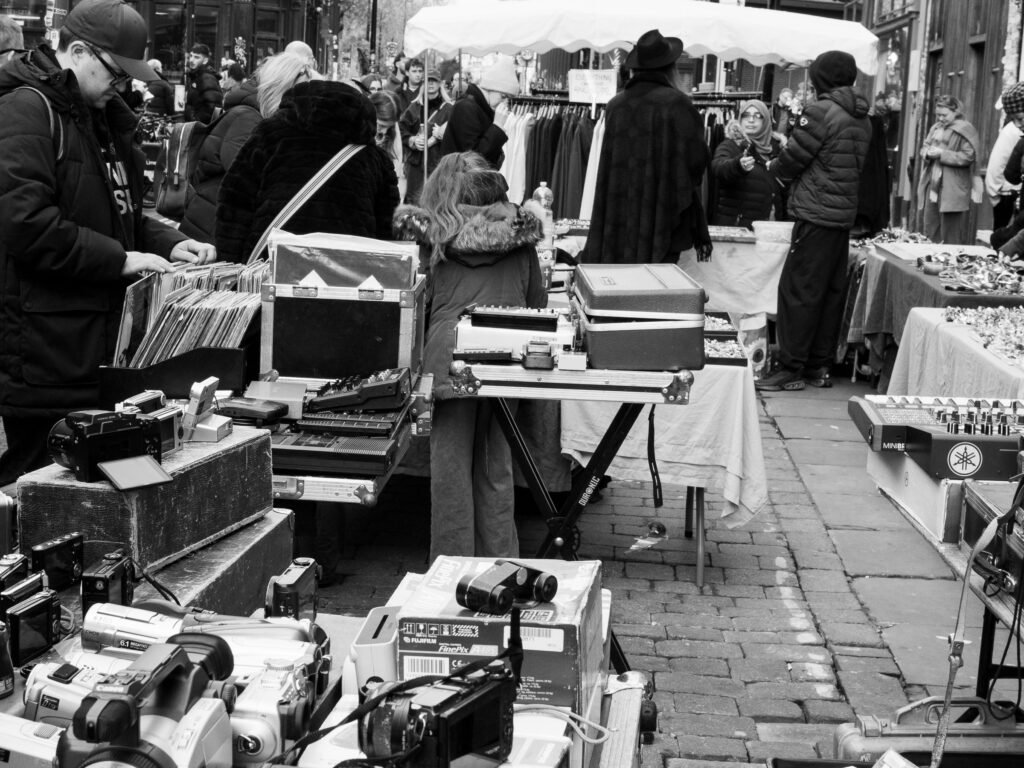
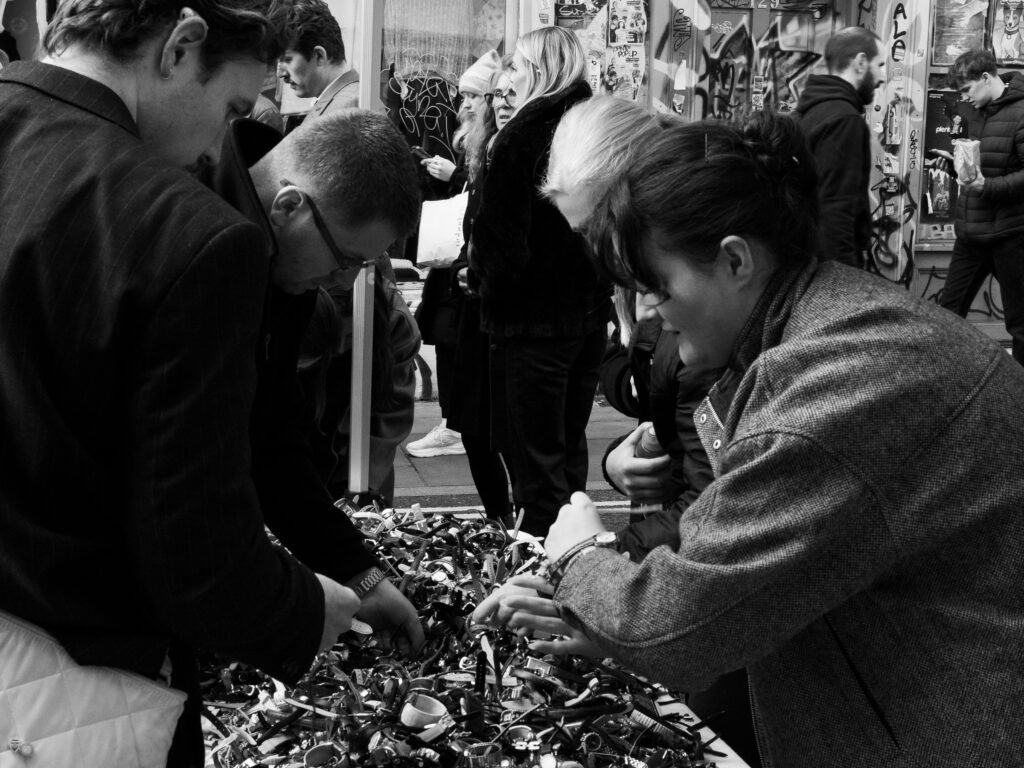
The older market stalls sell old cameras, books, watches, records, coats and bric-a-brac. However, nowadays the original market has been supplemented by additional market spaces which are a haven for those seeking out vintage clothes and similar retro fair. Unsurprisingly, given its proximity to trendy Shoreditch, the markets are a haven for those seeking alternative fashion.
Like all London markets, Brick Lane is a feast for the senses. One minute you’re walking past an acrobat juggling flame throwers, the next minute you feel your stomach rumbling, enticed by the waft of street food. The background buzz of friends catching up whilst they peruse the stalls is every now and again punctuated by music from a stall or a jazz band busking at the side of the street.
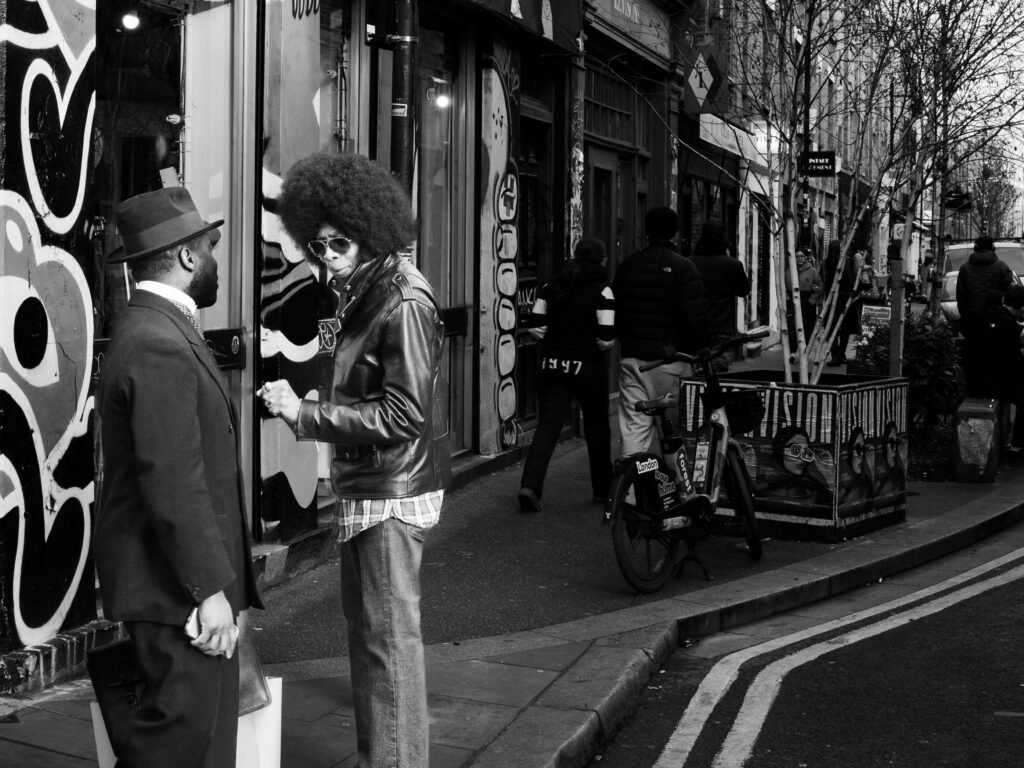
The colours of the merchandise on the market stalls clash with the vibrant graffiti that’s everywhere in this part of London. Every now and then a train goes over the bridge which dissects Brick Lane, punctuating the background humdrum with its loud progress, its passengers getting a momentary glimpse of the hustle and bustle of the street scene below.
And then there are the personalities that you pass. Is that guy a trendsetter or hangover from the 1970’s? Is that vibrant pink leopard skin fur coat a fashion statement or just everyday wear? How do people manage to walk in those platform shoes?
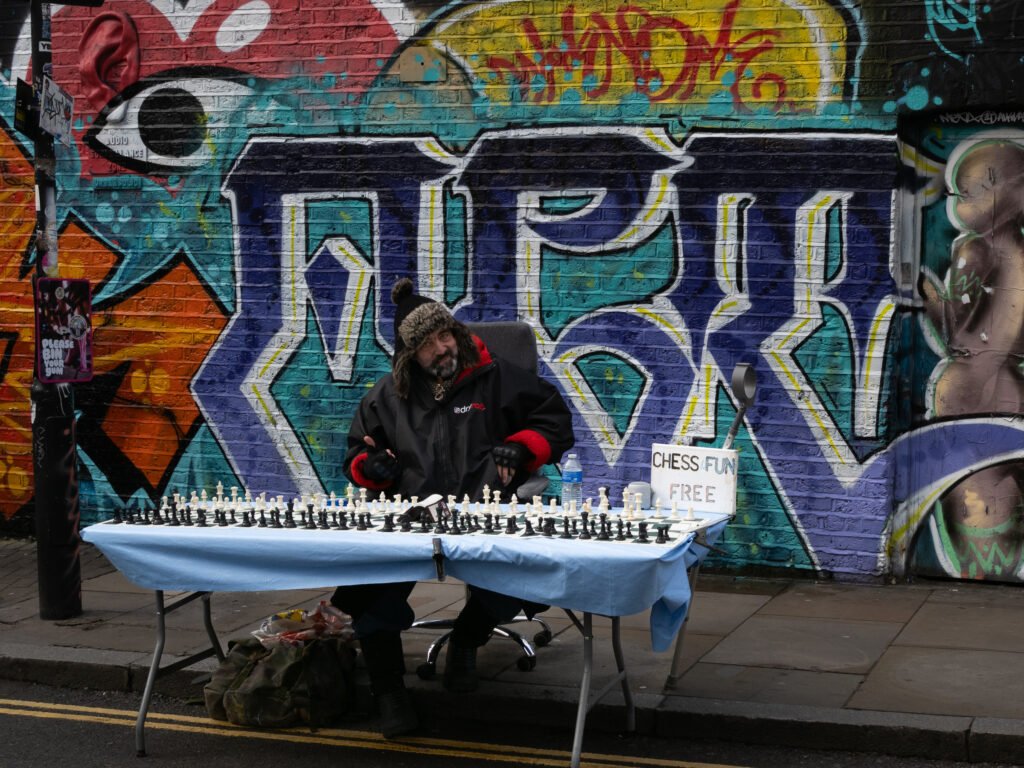
My favourite personality of the visit was an old guy who’d set up some chess boards on a table in the street, inviting passers by to challenge him to a game for free. Sat framed by a wall covered in graffiti he looked both entirely out of place, and entirely at home in the Brick Lane bustle. What was his story? Why was he inviting people to play chess with him? Was he some chess master who’d fallen on hard times and was chess busking? Or did he just simply love chatting to strangers and enjoying the challenge of the ultimate game of strategy?
The vibrancy that you encounter when you spend some time in a market link Brick Lane replenishes your faith in community. There are communities within communities that thrive around the Brick Lane market scene. You can feel it as you rub shoulders with the punters. Of course there are a fair share of first time visitors and tourists (and photographers) but you also hear and see people greet each other enthusiastically and ask how their week has been or what they got up to last night. There’s a sense of immediacy and intimacy that you simply don’t encounter on our normal high streets anymore, and I can’t help feeling we are poorer as a society for that reason. Our high streets used to have markets and stalls and independent traders, but decade by decade they have been lost to the inevitable march of the corporate machine.
And that’s why it’s so refreshing to spend some time in a market like this. Of course some of it is superficial, and plenty of the market’s local roots have absolutely been swept aside to cater for the hipsters and fashionistas. But the sense and spirit of independence, defiance and community still rings true. We’re lucky that London’s street markets are enjoying a renaissance – a sign perhaps that we’re all craving just a little bit of the spirit that they still offer.
And for me, just spending a few hours there was enough to trigger further my own memories of my childhood and Romford market. It’s fascinating and a little scary to think about what has happened over the course of the four decades or so that I was once a child in that market – both to me individually and to our society. Maybe one day soon I’ll take a trip back there and explore how the market is faring today.
This post was also published on my substack – https://frametograin.substack.com/
Leave a Reply